
iPhone
iPhone Screen Replacement: OEM, Refurbished and Aftermarket Explained
Three shops will quote you three very different prices for the same repair. The gap is almost never labour — it is which panel goes in.
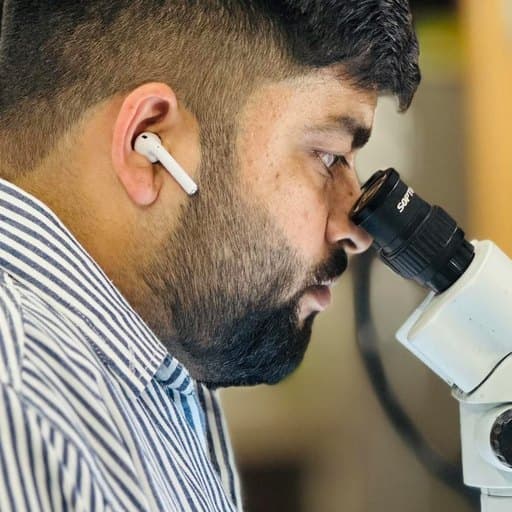 By Shiv SharmaLead Technician, Shiv i Care · 11+ years board-level Apple repair
Ask four repair shops in Ludhiana what an iPhone 13 screen costs and you will get four answers that may differ by more than double. It is tempting to assume the cheapest shop is honest and the rest are greedy. Usually the truth is duller: they are quoting different parts, and nobody is telling you which.
There are only three kinds of iPhone display on the market. Once you know how to tell them apart, the price spread stops being confusing and becomes a decision you can actually make.
1. OEM pull (original Apple panel)
A genuine Apple panel harvested from a donor iPhone — typically a device written off for board damage or water damage with an intact screen. The glass, OLED, backlight, Face ID flex and touch layer are all Apple parts that left the same factory as the one in your phone.
Colour, brightness, viewing angle, touch response, True Tone and 120Hz ProMotion on Pro models all behave exactly as they did before. This is the only category where nothing about the phone feels different afterwards.
2. Refurbished (original OLED, new glass)
The original Apple OLED is kept, the cracked outer glass and the polariser are separated off with a laser or heated separator, and fresh glass is laminated on. Done well, on good equipment, it is very close to an OEM pull, because the part that actually produces the image is still Apple's.
Done badly it fails in specific, recognisable ways: dust trapped under the glass, a faint rainbow sheen at an angle from a cheap polariser, or edges that lift after a few months because the OCA adhesive was not cured properly. Quality varies more in this category than in any other, which is why we only use refurbishers we have tested over time.
3. Aftermarket (non-Apple panel)
A complete third-party assembly. These split further into hard OLED, soft OLED and — on older models — TFT/LCD copies sold as if they were OLED. This is where the very low quotes come from, and where most of the complaints we hear about other repairs come from too.
| What you notice | Why it happens |
|---|---|
| Colours look colder or oversaturated | Different OLED stack, no Apple colour calibration |
| True Tone missing or greyed out | Calibration data lives on the original panel |
| Auto-brightness behaves oddly | Ambient light sensor routing differs |
| Touch misses light taps near edges | Cheaper digitiser controller |
| ProMotion drops to 60Hz | Panel cannot do variable refresh |
| Battery drains faster | Aftermarket panels typically draw more power |
| "Unknown Part" warning in Settings | Apple's part pairing check |
About that "Unknown Part" message
On iPhone 11 and newer, iOS checks whether the display is paired to the logic board. Any screen swap that does not include transferring the original pairing chip produces a notification and a permanent entry under Settings › General › About. It is a parts-pairing notice, not a fault — the phone works — but you should be told about it before the repair, not discover it afterwards. We move the original pairing components across wherever the model allows it, and we tell you upfront when a model does not.
The Face ID rule nobody should break
What we charge in Ludhiana
Screen pricing moves with the parts market, so treat these as the honest range rather than a fixed rate card. Older models (iPhone 11, XR, SE) sit at the bottom; current Pro Max panels sit at the top. We quote your exact model in writing before we open anything, and diagnosis is free.
- iPhone X to 11 series — the widest choice, and refurbished panels here are usually excellent value.
- iPhone 12 and 13 series — parts pairing applies, so ask specifically what happens to True Tone.
- iPhone 14, 15, 16 and 17 series — OEM and good refurbished only, in our view. Aftermarket panels for these models are not yet good enough to recommend.
How to choose, in one paragraph
If you plan to keep the phone two years or more, or you resell Apple devices, or you simply notice screen quality, go OEM or good refurbished. If the phone is three or four generations old and you need it working for another year, a quality aftermarket panel is a reasonable, honest choice — as long as somebody tells you what you are giving up. What is never reasonable is being sold a copy panel at an original price, which is the single most common complaint we hear from customers arriving from another shop.
Questions worth asking any repair shop
- 1Which of the three panel types is in this quote?
- 2Will True Tone still work after the repair?
- 3Will I get the "Unknown Part" notification?
- 4Is Face ID protected during the repair, and what happens if it fails?
- 5What is the warranty, and is it printed on the invoice?
We answer all five before we start, on every job. Bring the phone to Civil Street, Ghumar Mandi, or read more about our iPhone repair service.